When the Internet Assigned Numbers Authority (IANA) began delegating country-code top-level domains (ccTLDs) in the late 1980s and 1990s, the allocation framework was strictly administrative.
Two-letter country codes were assigned based on the International Organization for Standardization’s ISO 3166-1 alpha-2 code list, designed to provide every recognized nation and dependent territory with a distinct digital country code.
Whether matching technology specialization (.ai, .io), global media (.tv, .fm), Scandinavian vocabulary (.nu), or cycling clubs (.cc), these national suffixes handed micro-states an extraordinary macroeconomic engine.
Click a dot or a domain button to expand its details. Drag the map to pan and use the zoom buttons to separate the clustered Pacific islands. Dot size shows observed hostnames.
Source Domains Project
The Caribbean Island Funding Half Its Budget on AI
The AI boom has become an unexpected economic windfall for Anguilla, a tiny British Overseas Territory in the Caribbean with just 14,865 people, where domain registrations are now generating nearly half of government tax revenue.
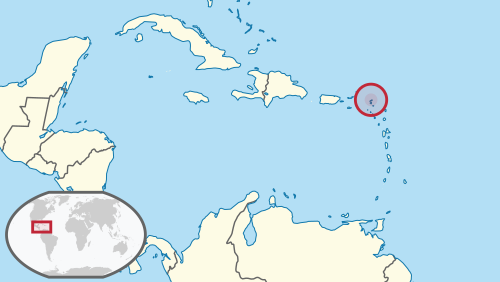
In 1995, Anguilla was assigned the internet domain extension .ai, which remained largely obscure for decades until the global AI boom turned it into a sought-after digital address for startups, tech companies, and research labs.
What was once a little-known territorial identifier has become a valuable source of income for the island, with demand showing few signs of slowing down.
One country code, 1.3 million domains
Anguilla’s .ai took off with the AI boom. Tap a bar to see what drove each year.
2018
Baseline legacy ccTLD operations.
- Registered domains
- Under 100,000
- Revenue (USD)
- US$2.9 million
- Revenue (EC$)
- EC$7.83 million
2020
Early-stage tech startups begin to adopt .ai.
- Registered domains
- About 120,000
- Revenue (USD)
- Not reported
- Revenue (EC$)
- Not reported
2022
The November launch of ChatGPT triggers mass market demand.
- Registered domains
- About 200,000
- Revenue (USD)
- Not reported
- Revenue (EC$)
- Not reported
2023
A global AI venture boom pushes domain earnings above 10% of national GDP.
- Registered domains
- About 280,000
- Revenue (USD)
- US$32.0 million
- Revenue (EC$)
- EC$86.83 million
2024
Registrations surge 350% year over year. Anguilla signs a five-year MoU with Identity Digital.
- Registered domains
- About 500,000
- Revenue (USD)
- About US$38.6 million
- Revenue (EC$)
- EC$104.25 million
2025
The platform migrates to Identity Digital. The ccTLD now supplies about 47% of state income.
- Registered domains
- 700,000+
- Revenue (USD)
- US$85.3 million
- Revenue (EC$)
- EC$230.5 million
2026
The namespace crosses the 1 million mark and a wholesale price increase takes effect. Registrations generate US$80 million in the first seven months alone.
- Registered domains
- 1,277,727 (June)
- Revenue, January to July (USD)
- US$80 million
- Revenue, January to July (EC$)
- EC$217 million
- February peak (EC$)
- EC$32.8 million
How it started, 1995 to 2009
1995 IANA assigns the .ai country code to Anguilla.
1995 to 2008 Use stays limited to local island websites and government entities. Revenue is negligible.
2009 The registry opens registrations to the global public.
Sources are the Government of Anguilla annual budgets from 2018 to 2026 and the government’s public press release on 2026 revenue collected so far.
The Sinking Country Recreating Itself In The Metaverse
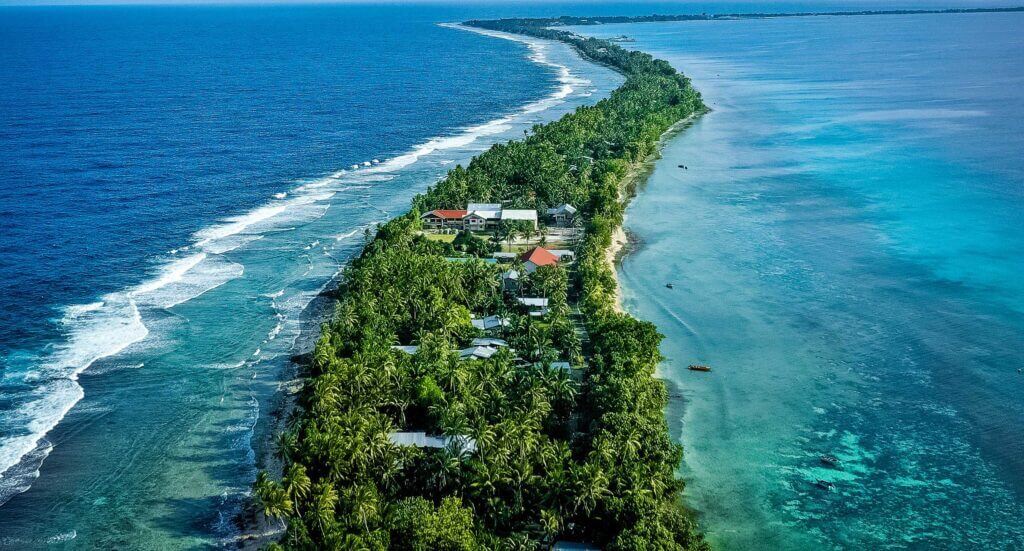
In 1996, IANA allocated .tv to Tuvalu, a Polynesian nation of 11,000 residents on low-lying coral atolls.
Recognized worldwide as the shorthand for television, Tuvalu became the first nation to license its ccTLD for commercial media.
In 2000, Tuvalu used its first $1 million royalty payment from dotTV Corporation to pay the entrance fee to join the United Nations. With the rise of video streaming platforms like Twitch, Tuvalu re-tendered its registry contract to GoDaddy in 2021, doubling annual domain royalties to $10 million, making up roughly 15% of national GDP.
What .tv pays Tuvalu
A two-letter code for a chain of coral atolls became a steady source of government income. Tap a bar to see how each year moved. Dashed bars are projections.
Annual revenue from licensing .tv, in US$ millions
2019
Verisign pays about $5 million a year to run .tv under a deal signed in 2011.
- Revenue (USD)
- US$5,000,000
- Change
- First year shown
- Status
- Actual
2020
Revenue climbs above $7 million.
- Revenue (USD)
- US$7,120,268
- Change
- Up 42.4% on 2019
- Status
- Actual
2021
Verisign’s 20-year agreement expires. GoDaddy (NYSE GDDY) wins a competitive bidding process for the exclusive rights to market and manage .tv registrations. Revenue dips during the transition and reaches its lowest point in the series.
- Revenue (USD)
- US$1,578,120
- Change
- Down 77.8% on 2020
- Status
- Actual
2022
Revenue more than doubles from the 2021 low.
- Revenue (USD)
- US$3,510,020
- Change
- Up 122.4% on 2021
- Status
- Actual
2023
Revenue rises more than 2.5 times, the largest jump in the series.
- Revenue (USD)
- US$9,075,180
- Change
- Up 158.6% on 2022
- Status
- Actual
2024
Growth flattens and revenue holds near $9.1 million.
- Revenue (USD)
- US$9,133,870
- Change
- Up 0.6% on 2023
- Status
- Actual
2025
Revenue passes $11 million for the first time.
- Revenue (USD)
- US$11,041,860
- Change
- Up 20.9% on 2024
- Status
- Actual
2026
Projected revenue edges up to $11.26 million.
- Revenue (USD)
- US$11,262,700
- Change
- Up 2.0% on 2025
- Status
- Projected
2027
Projected revenue reaches $11.5 million, the series high.
- Revenue (USD)
- US$11,499,220
- Change
- Up 2.1% on 2026
- Status
- Projected
The story behind .tv
1995 A fax tells a government office in Tuvalu that the island nation has been assigned the .tv country code.
2011 Verisign signs a deal to administer .tv. It pays about $5 million a year, up from $2 million under the previous agreement.
2019 About one-twelfth of Tuvalu’s gross national income comes from .tv. Twitch’s average concurrent viewership has grown 1,580% since September 2012.
2021 Verisign’s 20-year agreement expires. GoDaddy (NYSE GDDY) wins a competitive bidding process for the exclusive rights to market and manage .tv registrations. Revenue dips during the transition phase.
Source: The Government of Tuvalu National Annual Budgets.
Yet Tuvalu faces an existential threat with a maximum elevation of just 4.6 meters. Rising sea levels threaten to submerge 95% of the atolls by 2100.
In response, Tuvalu launched the “First Digital Nation” initiative, creating a cloud-hosted 3D LiDAR digital twin of its islands and amending its constitution to declare its statehood and .tv sovereign rights perpetual, even if its physical land disappears.
It is also actively investing proceeds from .tv towards climate resilience through initiatives like the Tuvalu Coastal Adaptation Project (TCAP) where the Government of Tuvalu is implementing measures to reduce the impacts of climate-induced sea level rise.
The Domain Gold Rush That Left Two Islands Behind
The island domain model has not been universally successful.
Tokelau and Niue, both part of the Realm of New Zealand, sought to attract registrations by offering their country-code domains at no cost. The approach did not deliver the intended results.
Tokelau partnered with Dutch firm Freenom to offer free .tk registrations.
Free pricing drove domain count to 27 million, making .tk the largest ccTLD on Earth.
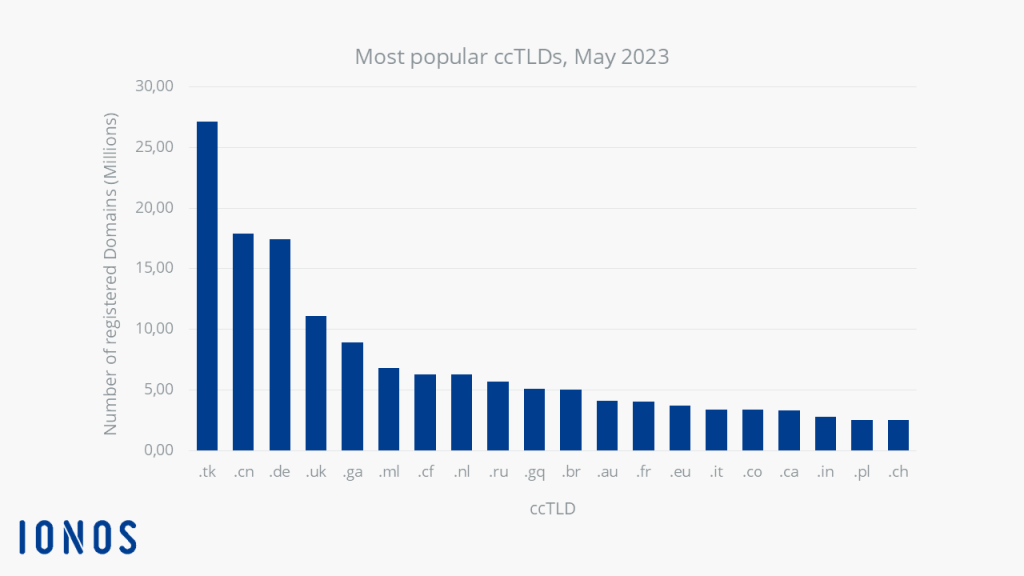
However, zero cost attracted massive cybercrime, turning .tk into the source of 14% of global phishing attacks.
Following a major lawsuit by Meta, Freenom shut down. Millions of .tk sites went dark overnight, and DNS audits reveal that only 8,862 are actively registered and operating today.
Learn more by listening to a podcast by the MIT Technology Review.
Niue’s story was different but no more rewarding. In Scandinavian languages, “nu” means “now,” and Swedish businesses embraced the .nu extension, growing it to over 500,000 registrations.
However, the domain had been delegated to a private entity that transferred operational control to the Swedish Internet Foundation without island authorization.
Despite generating tens of millions in fees, Niue received $0 in direct revenue and lost its legal claims in Swedish courts.
Two Pacific Domains That Found Their Niche
Where free pricing failed, paid niche positioning worked. Samoa’s .ws, marketed globally as “Web Site,” hosts 707,800 observed hostnames and achieves an 86.7% live A-record resolution rate, the highest among commercialized island domains.
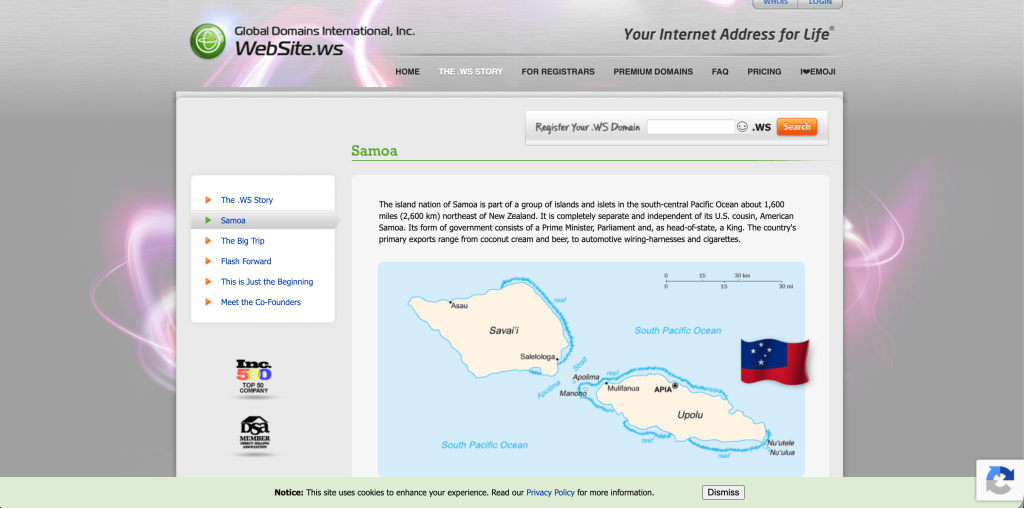
The Federated States of Micronesia’s .fm, commercialized in partnership with BRS Media since 1998, carved out a lucrative niche among radio stations, streaming channels, and podcasting platforms such as anchor.fm (acquired by Spotify), and now hosts 153,000 hostnames with a 77.9% live resolution rate. Together, they show that specialized, paid positioning yields high-retention, functional digital infrastructure.
The Domain Built on a Disputed Archipelago

Assigned to the Chagos Archipelago in the Indian Ocean, .io holds 13.8 million observed hostnames, ranking as the 28th largest top-level domain on Earth.
Because “I/O” is the universal computer science abbreviation for “Input/Output,” the technology industry, venture capital funds, and Web3 developers adopted .io as the default domain for software applications.
That success carries acute political risk.
The territory has no permanent civilian population and functions as a joint US-UK military base on Diego Garcia, following the forced displacement of the Chagossian people in the 1960s and 1970s.
In October 2024, the UK government announced a treaty to transfer sovereignty over the archipelago to Mauritius.
Under ISO 3166-1 rules, country codes can be retired when a territory’s status changes, which creates potential long-term uncertainty for the 13.8 million hostnames built on .io.
600 Residents, 11.6 Million Websites
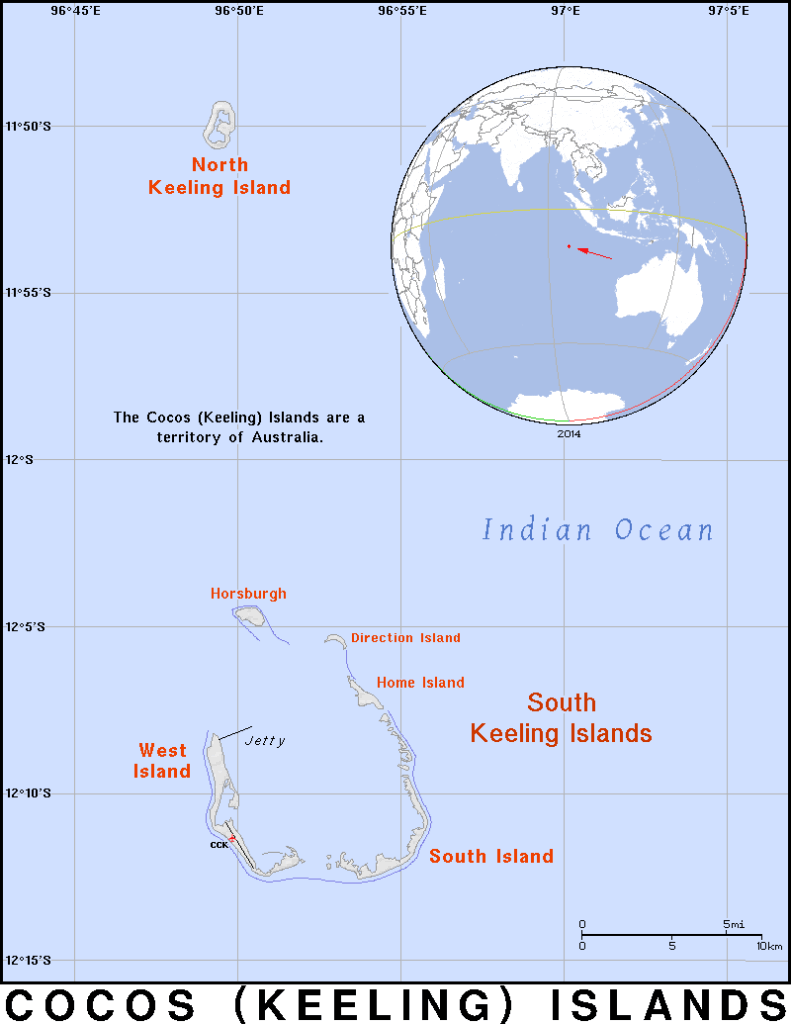
The Cocos (Keeling) Islands, an Australian external territory in the Indian Ocean, have a population of just 600 residents, yet their .cc domain holds 11.6 million observed hostnames.
Marketed as an alternative to .com, .cc was commercialized by Verisign in 2001, finding popular use cases with churches, and cycling clubs.
According to the territory’s annual 2025-26 budget, over $5 million AUD ($3.5 million USD) would be generated through the renewal of .cc domains, and a portion of it will be used to fund “community improvement initiatives”.
Closing Thoughts
A country code was never meant to be an asset. It began as an administrative label, a two-letter entry on a list, handed out before anyone knew what a domain name could be worth.
What happened next depended less on the code than on the choices made around it.
Who ran the registry, who set the price, and whether the islands kept a seat at the table all mattered more. Anguilla, Tuvalu, and the Cocos Islands turned a quirk of the alphabet into schools, budgets, and a measure of independence.
Tokelau and Niue watched theirs enrich others. And for the Chagos Archipelago, the most popular code of all may outlast the very territory it was named for.
The internet has always claimed to be borderless, but these tiny places remind us that it still runs on someone’s ground.
Extra Reading
Tokelau’s free domain began with one stubborn trip. In 2000, a Dutch entrepreneur named Joost Zuurbier made his way to the atolls, which at the time could only be reached by flying to Samoa and then catching a ferry that sails every couple of weeks on a shifting schedule.
His idea was to take a dormant country code and plan an alternative path for its commercialization.
First he had to win over the islanders, then earn approval from IANA, and then solve a practical problem, since the registry needed a footprint on the island itself.
At the time, Tokelau had only three computers and a dial-up link that could manage emails without attachments and nothing more.
Zuurbier first had to bring real internet connectivity to Tokelau.
Once he did, he and the islanders, represented by Aliki Faipule Kolouei O’Brien, agreed on how the revenue would be shared. IANA then delegated .tk to the local telecom company, with Zuurbier’s team handling the technical side.

Leave a Reply