Listen to this post:
Geothermal is still niche today, but it is changing quickly. Demand for new electricity is surging, geothermal now has backing from both parties in Washington, and Fervo Energy has $12 Billion in orders for its technology.
Tim Latimer, Fervo’s co-founder and CEO, calls this a once-in-a-generation boom, and he sees an immense opportunity for geothermal to deliver the reliable, cost-effective power the country needs.
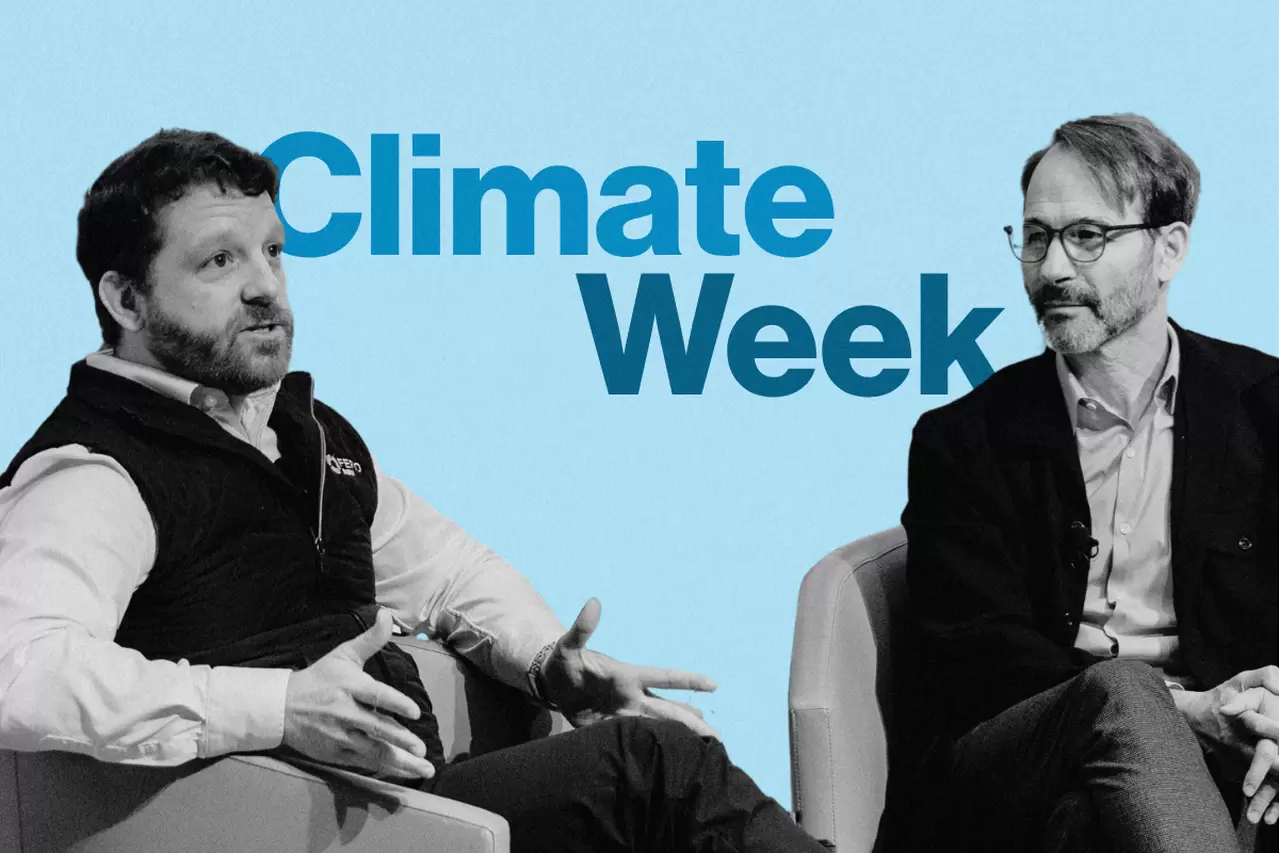
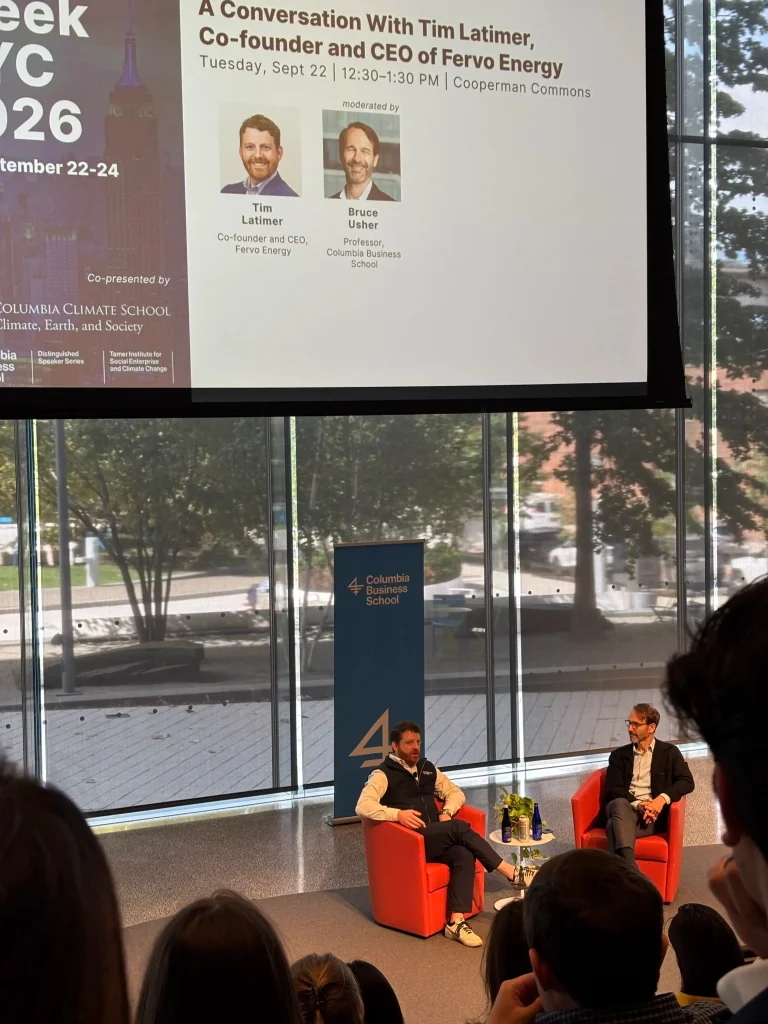
In this wide-ranging conversation with Bruce Usher, he talks about how a drilling engineer became a founder, how to finance first-of-a-kind infrastructure, what it takes to lead a company as it grows, and plans to scale Fervo in the US and internationally.
Key Takeaways
- Customer procurement and policy are now driven by the need for reliable, cost-effective electricity. That gives geothermal value that does not depend on carbon policy or election cycles.
- Drilling costs kept geothermal limited to fringe geologies. Latimer saw that the horizontal drilling breakthrough behind the shale revolution could remove that barrier. Geothermal is still niche today, but he says it is changing quickly.
- Project Cape Station in Utah will have 100 megawatts online by the end of the year, with 900 megawatts of plant under construction. After the next phase it will supply well over 10% of power generation in the state.
- A major geothermal permitting bill recently passed the House on unanimous consent. Geothermal now has tax credits, and Latimer jokes it may be the one thing that can heal the country’s divide.
- Data centers and industrial users will co-locate load at a geothermal site, so projects can skip a grid interconnection process that can take 10 years. Fervo has signed a 396 MW direct-load agreement with Google. Internationally, Turkey and a handful of other markets offer room to expand through licensing and local partnerships.
Bruce Usher
Fervo is now the world’s leading next-gen geothermal company. What made you decide to take that leap into geothermal?
Tim Latimer
Great question, and thanks for having me. It’s fun to talk to a bunch of business school folks. I was in your seat roughly 10 years ago, when I was thinking about starting Fervo out of an MBA program. So it’s fun to be back in this environment, and I appreciate the invitation.
Something led me to business school with this itch toward entrepreneurship. I sometimes call myself a reluctant entrepreneur. I don’t think I set out to be one. I got to entrepreneurship in what may be one of the most effective ways, which is that I became so obsessed with an idea that, through a process of elimination, I realized I would need to start a company to make that idea happen in the world.
To paint a picture of where I was at the time, I started my career in the oil and gas industry about 15 years ago. There was a huge boom in drilling in the United States because the shale revolution was kicking off. I’m from Texas, and I went to college at the University of Tulsa. Pretty much everybody in my graduating class wanted to work in oil and gas, because it was the boomiest of the boom times. So I found myself working in South Texas as a drilling engineer. I worked a two-weeks-on, two-weeks-off rotation, living on the drilling rig and making operational decisions and analyses.
One of my first jobs was in the Eagle Ford. The geology there was hotter than in a lot of other oil and gas basins, and we were having equipment fail in the hole because of that. I was tasked with researching solutions to deal with these really high temperatures. I had never heard of geothermal before, but all of the papers and tools I found talked about this thing called geothermal. So I asked myself, what is this geothermal thing, and maybe it can help me solve this problem. I read more and more about it. I was also at a point where, as interesting as the oil and gas industry was, I was getting more interested in climate. I wanted to know whether my career was aligned with driving toward lower carbon emissions, and drilling for oil is not the most directionally aligned with that.
As I learned more about geothermal, I learned that the skills I had developed as a drilling engineer could also apply to this clean energy resource. It felt a little like a life hack. I looked at solar and wind, and they were interesting, but I didn’t see what I was uniquely bringing to the table. Then I found a place where a drilling engineer could go and work on something that is actually a nuclear energy resource.
The more I read, the more I discovered that geothermal was pretty niche at the time. It’s still niche today, although we’re changing that quickly. It was niche because drilling costs made it cost prohibitive to develop geothermal in new places outside of really fringe geologies. I had the insight that the oil and gas revolution happened because of a huge breakthrough in drilling performance. If drilling was the technical barrier for geothermal, we could have a similar revolution by adapting those same technologies to geothermal. I became completely obsessed with the idea. I was a couple of years into my career as an oil and gas engineer, working for an 80,000-person company.
I told my boss and my boss’s boss, did you all know you could use these same drilling techniques for geothermal? I got a nice pat on the head. That’s nice, Tim. I figured I was not going to alter the entire global strategy of an 80,000-person company as a two-year engineer. So I thought, there are all these geothermal companies out there already, and I’ll go join one of them. I made a list of the 10 biggest geothermal companies in the world and cold called all of them.
One of the unlocks in oil and gas at the time was that people had just started systematically drilling horizontal wells. You drill deep vertically, then turn and drill horizontally for a couple of miles, and you get more bang for your buck from every well. That was the bright idea I had for geothermal. I called these 10 largest geothermal companies and asked why they weren’t drilling horizontally. More often than not the answer was, oh, that’ll never work. I realized there was a huge disconnect between the frontier of technology in oil and gas and what was happening in geothermal. Both communities were solving the technical challenge of drilling wells, but they weren’t talking to each other, and the right technology transfer wasn’t happening. I pitched these companies on drilling wells horizontally, and I offered to come drill and be part of the team doing it. I discovered there were no teams doing that.
I had pitched about 10 different companies on this idea, and none of them had any appetite for it. If I couldn’t change my own company, and I couldn’t join another one, that only left entrepreneurship. I fundamentally believed, after doing a lot of research and analysis, that you could adapt new innovations in drilling from the oil and gas industry to geothermal in a way that would completely revolutionize the world. One of my driving factors was this question. What if I was right about that idea, and we just never tried it? I became pretty obsessed with that. After eliminating the more traditional career paths, I realized that starting my own company to pursue this technology vision was the only way to test it and get the idea out into the world. That’s how I became an entrepreneur.
Bruce Usher
I’m very glad you tried. There’s a lot to learn from having deep expertise in an industry right next door. You learned a lot from the oil and gas industry. When you became an entrepreneur, was there anything you had to unlearn?
What to bring and what to leave behind
Tim Latimer
Part of the reason I had to leave the company is, as I mentioned, there was no risk appetite to try a new technology in a new domain. I heard all sorts of things, from we’re not an electricity company and we can’t get into that, to other reasons not to take the risk. A lot of entrepreneurship is about taking calculated risks. You aren’t rewarded in a large corporate for thinking outside the box, and that is why entrepreneurship exists.
There’s a framework I think about from time to time, which relates to one of our fundraising conversations earlier about risk taking. It isn’t my idea. It’s from Jeff Bezos, who talked about why startups are better at innovation than corporates. Say you’re an entrepreneur with an idea for a startup, and you pitch 20 VCs. Nineteen say no and one says yes. You have the funding to try. Now say you work at a large corporate with 20 people in the chain of command ahead of you, and you need sign-off from other departments because your idea affects their work. You get 20 people aligned to hear the pitch, and 19 say yes but one says no. You don’t do it, because you don’t have the right sign-off and buy-in. That’s a total inversion of the risk taking that happens in the startup world.
So as an entrepreneur, you have to learn how to take the right calculated risks and how to try something new. You have to move forward on a project even if you don’t have every single thing buttoned up, because you have faith that you’ll have the team to figure it out as you go. You can’t really do that in a corporate environment.
I will say there’s one thing I brought with me into geothermal, and I think it’s really important for hardware innovation and startups. My early career was spent supervising crews on a drilling rig. When you have that job, you walk away with a huge appreciation for the importance of culture and process in driving safety. It’s not a software thing or an app. If you make a mistake on a drilling rig, there can be consequences. There’s heavy equipment, and there can be safety issues.
When I first got to Silicon Valley, there was a whole culture of move fast and break things. If you’re building a software business with very few consequences for mistakes, that’s a fantastic culture to have. Most hardware businesses don’t have the luxury of costless mistakes. There’s a real cost to people or the environment for mistakes, and you have to balance that the right way. So we don’t say move fast and break things. We say move deliberately, with the right risk analysis.
We talk about this internally as a team. We have a huge capacity to take risk on new technology. A big corporate might want to do things the way they’ve been done for the last 50 years, and might not try a new drill bit or a new motor or a new turbine design. We have a huge appetite for that. But you have to do the right analysis so that the downsides are capped and managed. Failures are inevitable. If you don’t have any failures when you’re trying new technology, you’re not trying enough.
A lot of my entrepreneurship journey was figuring this out. Most of the ideas, catchphrases, stories and lore of Silicon Valley-style entrepreneurship are built around software businesses. A lot of what we did was figure out which things from a corporate environment you need to leave behind, because you’ll never be innovative if you don’t. We also had to figure out which things you should bring with you, because the Silicon Valley model doesn’t work well for hardware entrepreneurship. There’s a balance there.
Bruce Usher
Very insightful. Was there a particular decision early in your career, or even in your education, that had a really large impact on the company? A moment where you look back and say, yes, that decision mattered?
The decision that changed everything
Tim Latimer
Quitting my job to go back to grad school was a big piece of this. The other piece is that I was pretty annoying in grad school. You all probably have a lot of project-based classes where you get together as a team and deliver something. It didn’t matter what class I was taking, whether it was about entrepreneurship, markets or organizational behavior. People would ask what class project we were going to do, and I would say, I have an idea. What if we did a go-to-market strategy for enhanced geothermal systems? While in grad school I probably repeated that same project a dozen times.
That’s part of why, when we raised our pre-seed and seed rounds, one of the points of feedback we got was, wow, it seems like you’ve already thought of all these questions. I had, because we had spent the last two or three years workshopping this idea and figuring out the flaws and the go-to-market strategies. My grad school experience was tailored around what I needed to put together and who I needed to bring on the team. I was doing an MBA while my co-founder and CTO was doing a PhD in Stanford’s geothermal reservoir engineering program. Even though I’m an engineer, I wanted another engineer as a co-founder, because the company is so technically intensive. So I found the right people.
There were different moments along that grad school journey where I got the confidence to actually take the leap. In my second year, I faced one of the scary parts of entrepreneurship, which is running out of money. I mean that not just for the business but in a personal capacity. Like a lot of folks in this room, I was loaded up on student loans in my second year of business school, and that weighed on me. Was this the right time to start this journey? I had a job offer from a prestigious consulting firm, and I almost talked myself into doing that for two or three years and then starting Fervo. That is a bit of a danger. I have a lot of friends who told themselves at graduation they would do the grown-up job for two or three years and then become entrepreneurs. Not a lot of them have pivoted back.
I took a class at the time called Stanford Climate Ventures. The lecture Dave Danielson gave in that class was pivotal. Many of you may know Dave. He’s a big deal in the space and one of the managing directors of Breakthrough Energy Ventures. This was in 2016. He plotted out his wedge model on carbon. The world is on a certain trajectory of carbon emissions through 2050 if we don’t intervene, and we need to reduce that number to somewhere between zero and 10 gigatons a year. The way he described it, we need a bunch of technologies that can each knock out a gigaton per year of carbon emissions in order to get that done.
Then he quizzed us. What do you think the most successful climate technology company in history is? At the time, the answer was some combination of First Solar, because they innovated a great new panel design that let the solar industry flourish, or Tesla, because they developed electric vehicles that displace internal combustion engines on the road. If you looked at how many carbon emissions those companies had successfully abated, it wasn’t even at the gigaton scale yet.
He plotted out Tesla. In 2016, as we were having this conversation, they were a year or two into production of the Model 3. What led them to the Model 3 was that they made the Roadster and then the Model S. It took them five years to go from a niche product to a mass-market product. It took five years to go from a prototype to a niche market product with the Roadster. It took five years from company founding to the Roadster. And it took five to 10 years of foundational academic research on lithium-ion batteries to get to a point where any of this could work.
His point was that it’s 2016, and no matter how successful your business is, you’re not going to grow much faster than Tesla or First Solar did. If it takes five to 10 years to scale a mass-market product to the point where it has global carbon abatement opportunities, five years to go from first prototype to mass-market product, five years to go from company founding to first prototype, and five years of research before that, then you either start your company today or you’re not going to hit mid-century goals.
I was so inspired by that. It gave me the confidence to say that those two or three years of waiting are expensive. They cost me in opportunity, and they cost in scaling any idea. I turned down the other job offers and went all in on Fervo. It came full circle, because Dave ended up being one of the first investors in Fervo, which gave me some confidence to take the leap too. I always think about that moment. There’s an urgency of now in a lot of these things. Every year you wait or delay, you’re delaying the growth of your business and the impact you’ll have on the world, in ways that can be pretty costly. That was pivotal in giving me the confidence to go all in.
A climate company in a country that doesn’t prioritize climate
Bruce Usher
Big decisions. Let’s talk about what I think of as a paradox of climate change in the United States. For most Americans, climate change is not a top priority, and the political leadership today does not treat it as a priority at all. Yet this happens to be a pretty good country to start a climate tech company. What are the advantages of being based here as a climate tech company, and what are some of the challenges?
Tim Latimer
There are all sorts of advantages. We have a robust venture capital ecosystem that can provide private sector financing for what we do. We have world-class universities and national labs that do the foundational research that lets us push the frontier of technology. The Department of Energy is fantastic at shepherding the future direction of alternative energy technologies. There’s a great workforce here. There’s also a bit of federalism at play that is really nice. People often talk about the United States as the laboratory test bed of democracy, with 50 different states and 50 different jurisdictions. In a country with a more centralized government, if policies make it hard for your team to get off the ground, you don’t have many opportunities. Here, if a state is hard to operate in and hard to do geothermal projects in, we can go to the state next door and develop there.
The disadvantage, of course, is that we have a political system that can swing pretty wildly from election cycle to election cycle. A lot of the climate world is adapting to that right now. Whether you like it or not, I think it’s a realistic view of the world that you can’t mobilize capital at the multi-trillion-dollar scale needed to address climate change if carbon emissions are your only value proposition. That is bearing out in a real way right now. As demand growth, national security concerns and affordability issues pop up, you’re seeing both parties in the U.S. drop the priority of talking about climate. You’re seeing that happen around the world.
What we are finding successful in our business is this. The only way to create a successful climate business over time is to create an enduring product that has value beyond carbon emissions. It is totally fine for climate to be your personal motivation, and it’s totally fine for it to be the mission of the company. Being climate motivated is a great way to attract top-tier talent, because people want to solve this problem. But the product has to stand on its own.
In geothermal right now, we’re going through a once-in-a-generation boom and need for new electricity. What drives our customers’ procurement decisions and what drives policy is the need for reliable, cost-effective electricity. That is why our business can survive the political swings. That has enduring value before you even start talking about carbon abatement and the good we’re going to do for the world.
There was the clean tech 1.0 wave of the 2000s, and the clean tech 2.0 wave of the late 2010s and early 2020s. An enduring lesson that entrepreneurs and policymakers should take from them is that you have to build products, infrastructure and technology that provide real-world benefits to your customers in a cost-effective way before you factor carbon into the equation at all. That’s the only way to create an enduring business through cycles.
Why the U.S. is so bad at building
Bruce Usher
You mentioned challenges around policy and policy stability. You didn’t mention the challenge of actually building projects in America, including permitting. How do you think about that?
Tim Latimer
There’s a lot to say. The U.S. is really, really bad at building. We think about this all the time. In some ways, improving the technology was the easy part. We had novel ways of drilling wells, completing wells, and mapping the subsurface with fiber optics. When we started the company 10 years ago, that took up almost all of our bandwidth. Looking back in hindsight, it was the easiest thing we did. The rest of what goes around hardware innovation and building real projects was the hard part.
I can give a couple of examples. Project Cape Station is our flagship project in Southwest Utah. We’re going to start producing electricity from it later this year. We’ve been in construction there for three years, and we’ll have 100 megawatts online by the end of the year. We now have 900 megawatts of plant under construction. This is a really big project. It will be well over 10% of power generation in the entire state of Utah when we finish the next phase. It took us six years from our initial lease application on that site in 2018 to having our final NEPA permit ready in 2024 for breaking ground on power plant construction.
Bruce Usher
And that’s in a state that’s relatively regulatory friendly.
Tim Latimer
That’s right. Think about pitching VCs. A lot of the time, venture capital is the only flavor of financing with the risk appetite to come in on unproven technology. VC funds usually have an eight-to-10-year life cycle before they want to return capital. So the pitch is, we’re going to write you a check in year one of the fund, then we all wait six years while the project gets permitted, and then maybe there’s some value. That’s a tough pitch to VCs. Squaring the regulatory requirements and permitting challenges with actual financeable projects and technologies is the crux of why it’s so hard to bring new tech to market and why it’s hard to build things in America. It creates a very complicated quagmire that makes it challenging to get things done.
I think we found a way through because we had dedicated customers and we tied ourselves to the market. In those intervening six years, while we were waiting for a permit, the electricity business went from a terrible business to the most lucrative booming business imaginable. We got the timing right, but a lot of other businesses are not fortunate enough to have something outside their control come back in their favor.
Bruce Usher
You’ve spent a lot of time at New York Climate Week. Even though it’s in New York and you might think it’s finance focused, a lot of it is policy focused too. I think that’s partly because of the UN activities going on. There are Congress members and governors and everybody in town, and every conversation I’m in right now is about permitting reform.
Tim Latimer
That’s because permitting cuts across everything. If you care about climate, energy resilience or affordability, one thing overarches all of them, which is a more certain path to permit. We won’t build infrastructure that lowers carbon emissions unless we can get it permitted. We won’t improve national security by reducing reliance on international sources of fuel unless we can build energy infrastructure. Whatever your energy priorities are, permitting sits at the root of it.
Maybe one more thing. Building in the United States is hard not just because of the permitting environment and some of these other challenges. I think we’ve also lost a lot of the human capital capabilities to build. It doesn’t matter whether you’re talking about a power plant, a bridge or a skyscraper. We mostly outsource the actual construction of these projects to a very small handful of firms, the large EPC companies. That is a sector that has not faced creative destruction or pressure to innovate and improve in a long, long time. So across every category of infrastructure in the U.S., costs keep going up and up and up, and we don’t do anything to change it.
Right now there’s such a boom. Folks are building data centers all over the country and LNG terminals on the Gulf Coast. There’s also an aging infrastructure problem. Every bridge, road and transmission line we have in this country is behind on its depreciation schedule and needs an uplift. We do not have the people to build everything, and that’s a challenging thing we have to navigate.
I think we need to build better infrastructure across the board, not just geothermal power plants. It will take a combination of financial appetite to underwrite new and creative things and a more streamlined permitting process. We also have to convince people like the ones sitting in this room to do it. You are the best when it comes to human capital. Going into a profession where you’re actually building something is something you should do. Right now we aren’t bringing enough human capital into the space, and that includes not just the trades but also engineers, project managers and project financiers. So maybe that’s one call to action. Apply to Fervo, work at Fervo, work in geothermal. All of that is great. But I also want to prod people to think about which career pathways let you contribute to building something, because I don’t think enough really talented people are choosing that path.
Lessons from pitching VCs
Bruce Usher
You mentioned venture capital. When we came out of the room earlier we were chatting about your VC journey. Say a little about pitching to VCs early on, what that was like, and what you learned from the process.
Tim Latimer
We raised a Series E in December that was probably the only fun round I’ve ever had. It was the only one that happened the way you hear it’s supposed to, where all the VCs wanted in. It was a really hot round, and we were hugely oversubscribed. That came after raising five rounds that were a total slog. Until that Series E, which we raised last year, I never once walked into a VC’s office and heard, wow, we just finished the market map on geothermal, and we love it, and we’re so glad you’re here. One hundred percent of the time I had to convince them they should do energy, then convince them that within energy they should do geothermal, and then convince them that our particular version of geothermal was the one that would be successful.
It was a slog. I think whenever you have outlier success, it’s often because you had to go through that slog period. We had visionary VCs like Congruent Ventures, Breakthrough Energy Ventures and Capricorn, and some great corporates like Devon Energy and Helmerich & Payne, who saw the vision and came in early. In every round we got just enough to squeak by. Nobody else in geothermal did, because all of our competitors faced the same challenges we did. So we had a multi-year head start on the competition.
It’s actually funny. Now that Fervo has had its IPO, people always want to put together competitor market maps. They frame it as Fervo, the established business, and then a column of startups. Almost universally, all the startups in that column have been around longer than Fervo. It’s because this was a sector starved for capital for so long.
Bruce Usher
In addition to the normal VCs just saying no, you ran into something specific to your industry, which was the issue of venture capital versus project finance. Say a little more about that.
Tim Latimer
If you ever fundraise for a company, you will have VCs who love your business and love you, who want to be really excited about it, and who pass. That will happen over and over and over again, and it’s part of what makes fundraising so hard. A lot of times they aren’t just saying it. They genuinely like your business, but something about their fund structure doesn’t sit right.
Throughout the years we pitched a lot of corporates, but mostly Silicon Valley VCs, who are more attuned to the software world. If you’re building large infrastructure projects, one of the really important things to do is get infrastructure finance for those projects. You’re deploying billions of dollars of capital. You want to find investors who see that your project is so buttoned up that they’re willing to lend to you at a low-to-mid single-digit cost of financing. That’s part of what makes infrastructure work. For a lot of hardware companies, the question is which proof points get you down into that bucket. That’s also what makes the economics work. If you build a huge infrastructure project and a very large portion of it is financed by low-cost infrastructure debt, you can have phenomenal returns on a project that otherwise might not have great returns.
So if you’re going to build big infrastructure, you need to be really good at infrastructure finance, and Fervo has done that really well. We have a great infrastructure finance team. Earlier this year we closed the world’s first non-recourse project debt loan for enhanced geothermal systems, across a syndicate of banks, for $421 million. It’s a huge accomplishment and a first-of-a-kind financing. Of course, that went into our model, because a big part of Fervo’s economics depends on it.
Several VCs passed year after year after year. They loved the business and they liked what we do. Then they opened our model, saw a line item for project debt in the spreadsheet, and said, we don’t do businesses that need project debt, and we don’t understand them. They closed the model and passed. Infrastructure finance is a New York thing. It’s what you all do here. It’s not a Silicon Valley thing, and they aren’t familiar with it. A lot of those VCs have learned over the years that any investor should want an unfair advantage. You should invest in things you know more about than other people. A lot of them simply don’t know what infrastructure finance is. It feels like a New York thing, so they close the model, reject, and that’s the end of the conversation.
Bruce Usher
It’s an odd thing about different worlds not talking to each other. That’s often where the opportunities are. A lot of challenges, but they create opportunities. I thought that was really interesting. Let’s switch gears to one more topic before we open it up to audience Q&A, which is leadership. As Fervo has grown, what have you learned about leadership in that process?
Leading a growing company
Tim Latimer
It’s an important question. At a certain point, all a startup is is this. Can you attract, retain and motivate human capital that is powerful enough to overcome the incumbent advantage? Every startup starts as an idea, a business model innovation or a technology innovation. Startups then succeed or fail based on the quality of the human capital you can bring into the business. So it’s vitally important.
One thing I learned early on is this. I’m an engineer, and I started the business as an engineer. I love doing the engineering work, and I thought I would be doing engineering for a long, long time. We crossed the 15-person mark as a company, and I looked at my calendar. Between investor meetings, customer meetings and management meetings, time for individual contributor work had been squeezed out. I think a lot of founders struggle with that. You have to pivot to being a people leader way earlier than you think. I had some great mentors and spent a lot of time focused on that.
I think we’ve built a really strong culture at Fervo, and we have been very intentional about certain things. Our co-founder and CTO, Jack Norbeck, and I sat down in the first week he joined full time and drafted our mission, vision and values. A lot of people think that’s a check-the-box exercise, but we have kept ours unchanged to this day. They imbue what we do, and people talk about them all the time.
I’ll give you one that I think is fun. When we started the company, we got into a program called Activate at Lawrence Berkeley National Lab. We shared a cubicle up in the hills of the lab in the East Bay, and we were across the street from the University of California Berkeley Botanical Garden. If you’re ever in the area, it’s a beautiful place to walk. It’s absolutely gorgeous. Up in the hills you can see the whole bay. Jack and I made a commitment that once a week we would leave our phones in our shared cubicle, which was the entire Fervo office at the time. We would walk for an hour in the botanical garden and chat about how we were feeling and what was going on.
Then we got to the point of thinking about our values. One thing I reflected on in myself is that I’m not always the most chill guy, and I don’t think that’s true of a lot of entrepreneurs. We would hit some milestone, and 10 seconds later I was already on to the next thing we had to do. When people join Fervo, I tell them I would like them to make this their life’s work. I want you to be motivated, and I want you to stay here a long time. If you’re grinding and doing the kind of work it takes to do a first-of-a-kind thing in the world, you can burn out. It means long hours. I knew this was something we cared about. So one of the corporate values we wrote down is called stop and smell the roses. It’s a nod to walking through the botanical garden. It’s a conscious reminder that we need to lift up our teammates and make community building a core part of what we do. We extend that beyond Fervo to the towns we work in and the partners we have.
Now, in my weekly meetings, when senior executives present to me, there’s almost always a slide people call the weekly roses. People go out of their way to find somebody, often not even in their own department, who went out of their way to help them accomplish something. They thank that person and make sure the senior executives know they did it and get recognized. That creates a culture where people are much more excited about their coworkers. It also fights siloing. It’s easy to say we need to make sure our department hits its numbers and we can’t worry about that other department. But there’s a strong culture of saying, we faced a huge challenge this week, and the folks from supply chain rolled up their sleeves and fixed it for us. They know that will be elevated internally. That creates a super strong culture. It has worked well for attracting, retaining and motivating top talent.
We’ve also stayed laser focused on the mission. People know they’ll work as hard as we expect them to, and that it’s because they’re part of a company that will completely change the world. I think a lot of early startup founders really don’t appreciate how important it is to be intentional about culture and leadership. As soon as you hit that 15-employee mark, you’re trying to be a company founder and an executive. You can’t brute force your way to success anymore. It becomes a team sport. Your job as the leader is to make sure everybody wants to be on the team and knows what the goal is. That is what separates successful startups from unsuccessful ones.
Bruce Usher
Tough advice. A corporate leader can fix a broken technical issue, but a broken culture is not so easy to fix. One more question before we open it up. Do you have advice directly for MBAs thinking about their careers, such as which skills or experiences are most valuable? What’s one piece of advice you would give?
Advice for MBAs
Tim Latimer
Lean in, figure out what you’re passionate about, and take some risks. In a lot of ways, the mere fact that you’re sitting in this room right now means you made it. You’re going to have a business degree from one of the most prestigious institutions in the world. In terms of the band of outcomes for your life, the bottom half is now done, because you have this credential and this network. Everyone knows you’re super brilliant because you made it into this room.
I see a lot of folks in your shoes not take full advantage of that. There’s always the temptation, like I had, to go into the safe job and pick a slightly higher paycheck over something you’re actually passionate about. The mere presence of you in this room means you have a lot of upside and very limited downside. I think you owe it to yourself and to society to lean in and use the advantage you’ve now accrued. Don’t be bashful about what could go wrong, because you’re going to be fine. Use that to really try to make a change in the world.
Bruce Usher
Thank you for that advice. Let’s open up the audience questions. We have some mic runners.
Audience questions
Permitting reform, oil and gas, and project finance
Ana, audience member
Thank you so much for the conversation. I love Fervo because I think it represents what we can achieve when oil and gas people and climate people work together instead of against each other. I have two questions. The first is about how we can get more ambitious on policy. How strong is the imperative on the policymaker side, and on the financier and developer side, to get permitting reform? Can we really get to oil and gas parity before 2030, for example? If we do, what would that mean for Fervo’s current target? Can we really scale to five gigawatts by 2035? The second is on the finance side. Project finance is such a big hurdle for novel developers, especially with technology and resource risk. Can we get oil and gas companies to establish joint ventures and remove the financing barrier altogether?
Tim Latimer
Great questions. I’ll tackle the policy one first. I’m optimistic that some permitting reform will happen in Congress sometime in the next couple of years. Since we started the business in 2017, we’ve been going to D.C. and talking with lawmakers about permitting reform that’s always just around the corner. I think we’re closer now. Both parties feel a sense of urgency, and there’s more recognition from both sides of the aisle that something is broken in the system. That will force to the table a compromise solution that will be bipartisan. It has to be, because it needs to be enduring if there’s going to be permanent reform. At Climate Week there are a lot of policy conversations. There was a good headline yesterday from an interview with a senator who is quickly making his way up to Democratic Senate leadership, so he’s the voice to listen to on this. He has become bullish that permitting reform is imminent, and I think there will be a compromise solution that solves some problems that have persisted for decades.
I’m also very optimistic about geothermal. My first trip to D.C., six or seven years ago, was to ask a Senate staffer why wind and solar got tax credit extensions and geothermal didn’t. That was in the 2017 tax credit extension bill. The staffer told me he had been a Senate staffer for four years and I was the first person to ever come talk to him about geothermal. When push came to shove over what got into the bill, we got kicked out. Now there’s a huge coalition of people on both sides of the aisle who recognize the importance of geothermal. Last month a major geothermal permitting bill passed the House on unanimous consent. Both parties voted for it unanimously. That shows how far geothermal has come. We do have tax credits now, and people are paying attention to permitting reform. It’s bipartisan. Sometimes we joke that the one thing that can heal the country’s divide is geothermal, because we definitely get both parties to agree on it. I’m cautiously optimistic. I don’t know if it will happen this election cycle or the next, but there’s so much awareness that something is broken, and it’s leading to affordability, international security and environmental challenges. I think we will find a bipartisan solution.
On the project finance side, I actually don’t think the answer is oil and gas companies. At the end of the day it’s very hard for those companies to innovate and branch out of their core business segment. They have to answer to shareholders, and that has made it difficult for them to be meaningful players in wind, solar, electric vehicles and a lot of the now-successful energy transition solutions. Being successful in electric vehicles or geothermal or solar often requires a decade-long commitment, because they’re difficult businesses that require a lot of capital and expertise, and we have to scale them. Oil and gas companies are fantastic at scaling their core business. What you see over and over is that the political winds shift, shareholder interest shifts, and every decade or so oil and gas companies start and stop their transition efforts. As a result they never make much progress.
When we started the business 10 years ago, it was all about how we’re not oil and gas companies, we’re energy companies. They said they would invest in wind and solar, have a role in lithium, and do hydrogen, and that they would use their core competencies in structured finance, risk taking and operating at global scale to leverage into these industries. Now oil prices and gas prices have gone up, and all of a sudden shareholders are asking why they’re doing these other things and neglecting their core business. You’ve seen pretty much every oil major systematically pull back its energy transition efforts. And you know what’s going to happen five years from now. They’ll say, these are all growth factors and we need to get into them again.
There are a bunch of brilliant people in oil and gas, and we have oil and gas investors. The industry has skills we need in operating at scale, global supply chains and geology, and we’re always excited to hire and partner with those companies. But I don’t think first-of-a-kind finance is in the wheelhouse of what those companies are good at, or of what their shareholders are asking from them. So I don’t view that as a long-term intrinsic solution to this challenge.
Environmental and social risk
Adida, audience member
Thank you for being here. I have a background in the industry consulting, and my firm advised on environmental and social due diligence, so I’ve seen how it works for a really long time. I’m curious how much environmental and social risk factors into investors wanting to invest or being swayed against it. I imagine things like seismicity and water availability come up.
Tim Latimer
I appreciate the question and the help on the project. Much like my comments on safety at the beginning, we approach community engagement and environmental work this way because we think it’s the right thing to do. We take people out to our project site. We view the community as true partners. We’ve hired a bunch of people locally, and we have great goodwill in that area because we showed up early, listened and were transparent about our projects. We focus on reducing our own environmental footprint. I always tell folks at our company that it isn’t good enough for our end product to be clean. We need to make every part of the process more sustainable and more user friendly as well.
Here’s maybe a silver lining in the current moment. We did that work for 10 years and never got credit from anybody. It’s usually not what VCs ask about, and it’s usually not what infrastructure finance people ask about. They want to know about project risk, the independent engineer’s assessment and the offtake agreement. They want to talk about what’s on page 247 of your offtake. They don’t want to talk about how the town hall went.
That has totally changed in the last three months or so. I think this is a silver lining of the current political environment. You’re seeing a huge nationwide backlash against AI, and it’s being translated into a backlash against local data center sites. Companies that did local development the right way even when the market wasn’t asking them to, showing up early, thinking about community benefits, hiring locally, doing workforce training and asking the community what it needs, are being allowed to build their data centers and infrastructure projects. People who ignored that and didn’t think it was a priority are having their data centers blocked.
One exciting thing about the current moment is that it may be the first time we’ve engaged with investors across the whole capital stack where one of their first two or three questions is what you’re doing on community engagement. I think we’re really good at it, and we’re finally getting credit for it. I think it will force better projects across the country where local communities get to benefit more.
It’s hard to prognosticate where the politics will go on this, or where everything will go on AI. Personally, I think people will realize in the near term that, like a lot of things, you can develop a data center the right way or the wrong way. The companies doing things the right way will be rewarded for it. I hope we emerge with a much more structured development process where local communities win more. That’s the silver lining of the current moment. And it’s true that this is the first time in our entire 10 years of doing this business that this has been a top-two or top-three question from investors.
Bruce Usher
Very interesting. Let’s take a question from this side.
Global expansion and Turkey
Elida, audience member
Thank you so much for the insightful conversation. I’m Elida from Turkey, and I’m curious about Fervo’s global expansion strategy. One of your VC investors is Sabancı Climate Ventures. Sabancı is one of the largest Turkish conglomerates and has a huge portfolio in energy. Turkey is also ranked fourth in the world in geothermal electricity generation. Do you see Turkey as a potential international market expansion, or is there another market you’re looking at?
Tim Latimer
Great question, and it’s quite topical. I was just with Sabancı this morning, and we were talking about Turkey expansion. Turkey is a phenomenal country for geothermal. It had almost no geothermal installed 15 years ago and is now one of the top global markets. On top of that, there’s a lot of local expertise in manufacturing geothermal-specific equipment and components that has developed in Turkey. Some of the components at our project site in Utah are manufactured in Turkey. Turkey is not just a great market for developing geothermal. It’s also great for manufacturing geothermal equipment. So we’re really excited about the Turkish market, and I think we’ll look to expand there in the near term.
Where we are currently is this. I’m a huge believer in focus for startups. Building first-of-a-kind, really technically complex projects with huge permitting, financing and supply chain challenges in just one country is hard enough for a company to get going. So we’re staying laser focused on the U.S. as we think about an international expansion strategy. We will expand internationally. So much about development is local, including the market rules, how the electricity grid works, relationships with the right energy ministry and grid operator, and the local supply chain. We think we have a unique technology. In the near term we’ll look to expand into international markets by contributing Fervo technology and know-how, through licensing and project participation, to local developers who understand the market really well. Turkey is a top-five place for us on that front, because it has great domestic geothermal resources, the right supply chain and the right incentives for growth. That’s how we plan to expand, through partnership, in Turkey and another handful of markets we think are really well poised for geothermal growth.
Bruce Usher
Let’s take one more question from the back.
Grid connection versus dedicated lines
Dr. K, audience member
Thank you again for being here. This touches on the amount of time all of this takes. You’ve mentioned six years of permitting and the issues with infrastructure in the United States. I think you also wrote last month in a blog post that the delivery point out of Utah is retiring in 2027, which leaves you with some options and questions about what to do with the power you’re producing, given the challenges of getting integrated into the U.S. grid. Does that change or make you reconsider how you think about grid connection versus dedicated lines out of that plant?
Tim Latimer
It does, very significantly. If you looked at our business plan two or three years ago, the rate limiter on growth was interconnection queue position and transmission line access. That’s how we knew we were successful. We were working through the bottlenecks. Technology was the bottleneck, then supply chain, then capital. Every successful power developer ultimately reaches the point where interconnection governs growth. We have a big interconnection queue, and we plan to do grid-connected projects.
What has changed in the last two years is that an entirely new set of customers has emerged that did not exist before in the modern power sector. These are customers willing to co-locate hundreds of megawatts or gigawatts of electric load at your site and connect to you directly. Transmission interconnection can sometimes take 10 years, and the need for electricity is now. So there’s a whole set of customers who don’t want to wait 10 years for power and are willing to do the hard engineering, permitting and regulatory work to give you a co-located project. We think that is going to be a huge part of our growth going forward. In conjunction with that blog post, we announced that we have executed a large agreement with Google for a direct-load project. This is a really exciting time to be in electricity. Your rate limiter for growth was always going to be the interconnection and transmission system, and now it isn’t. You can bring in load and sell directly to customers. It has been an accelerator on our growth, and we no longer believe we’re limited by that.
At the same time, we believe, as do most of our customers, that these assets create the most value and the most benefits for other ratepayers if they are grid connected. So 100% of the projects we do are built with the ultimate intent of connecting to the grid. Even in cases like this, we’re asking whether we can bring a data center, or other industrial load, to our project site. If they want power in three years but the interconnection is seven years out, can we build and sell them electricity directly for four years before we both mutually connect to the grid? That’s where I think these assets belong long term. What’s exciting for us is that you could never do this in power before. Your growth was always limited by a very slow and lengthy connection process, and this opens up a new vector for growth that the industry has never had.
So we’re pursuing a dual strategy. A good chunk of our projects going forward will be sold directly to industrial users located regionally with us. But 100% of the time we’ll be looking to get those assets onto the grid, because that’s where I think they create the most value for all the stakeholders involved.
Bruce Usher
Tim, thanks for the conversation, and thank you for the advice. We much appreciate you joining us.
This conversation took place at Columbia University during New York Climate Week. Learn more about the event here.
Disclaimer: This post is for informational purposes only and does not constitute investment, financial, legal, or tax advice. It does not recommend buying, selling, or holding any security, including securities of Fervo Energy. The views expressed belong to the speakers and do not necessarily reflect those of the author or publisher. Statements about future plans, projects, and market opportunities are forward-looking and may not materialize. Readers should do their own research and consult a qualified professional before making any investment decision.
Leave a Reply