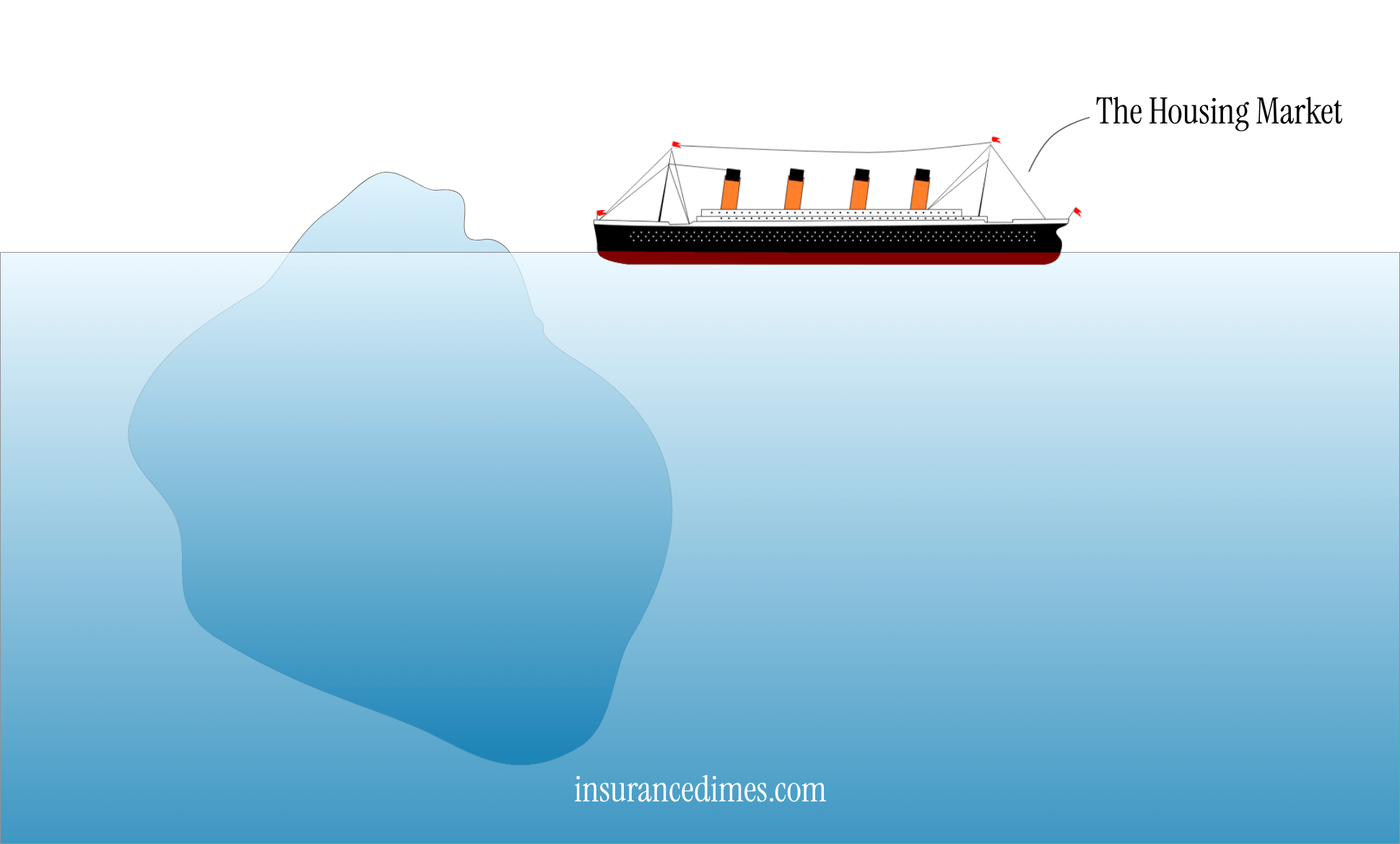
For most families, a home is the single largest asset they will ever own. It represents decades of mortgage payments, maintenance, and accumulated wealth.
Yet for more than six million American homeowners, that asset sits completely exposed.
A report from the Consumer Federation of America (CFA) took a hard look at this problem, drawing on nationally representative data from the 2024 American Housing Survey.
What the researchers found was that roughly one in seven homeowners in the United States, about 14.4 percent of all owner-occupied households, carries no homeowners insurance at all. That translates to approximately 12.2 million of 86.6 million owner-occupied homes are uninsured.
But the national average obscures a far more troubling picture. When the CFA broke the data down by race, income, age, and geography, the inequalities became impossible to ignore.
22% of Native American homeowners lack coverage
Consumer Federation of America · 2024 AHS Data
Homeowners Without Insurance by Race & Ethnicity
Share of owner-occupied households lacking homeowners insurance coverage
Source: Consumer Federation of America analysis of 2024 American Housing Survey data. Black, White, AAPI, Native American, and Multiracial categories are non-Hispanic. Hispanic can be of any race.
Across every racial and ethnic group the CFA analyzed, homeowners of color were significantly more likely to be uninsured than the national average.
Among Black homeowners, 11 percent lacked coverage. Among Hispanic homeowners, the figure climbed to 14 percent, nearly twice the national rate. For Native American homeowners, the number reached 22 percent, though the researchers acknowledge that data limitations make this figure harder to interpret with full confidence and call for further research.
By contrast, white homeowners were uninsured at a rate of just 6 percent, and Asian American and Pacific Islander homeowners sat at 5 percent.
15% of Homeowners earning <$50,000 were uninsured
Consumer Federation of America · 2024 AHS Data
Homeowners Without Insurance by Income & Poverty Status
Share of owner-occupied households lacking homeowners insurance coverage
By Annual Income
By Federal Poverty Status
Source: Consumer Federation of America analysis of 2024 American Housing Survey data. Poverty defined by federal poverty thresholds set by the U.S. Census Bureau.
Race and ethnicity do not operate in isolation. Income is a powerful predictor of whether a homeowner carries insurance, and the data make this clear.
Among homeowners earning under $50,000 per year, 15 percent were uninsured. Among those living below the federal poverty line, the rate jumped to 22 percent. For homeowners earning more than $150,000 annually, the uninsured rate dropped to just 3 percent.
The combination of low income and minority status is particularly stark. Among Hispanic homeowners earning $50,000 or less, 25 percent had no coverage.
Consumer Federation of America · 2024 AHS Data
Uninsured Homeowners: Race & Income Combined
Percentage of homeowners without insurance, by racial group and income bracket
Source: Consumer Federation of America analysis of 2024 American Housing Survey data. Black, White, and AAPI categories are non-Hispanic. Hispanic can be of any race.
Among Black homeowners in the same income bracket, the rate was 18 percent. Among white homeowners in that bracket, it was 12 percent.
At higher income levels, the racial gaps narrow considerably, which suggests that while discrimination plays a role, financial constraint is often the immediate barrier preventing lower-income families from purchasing or maintaining a policy.
Older Adults Face Elevated Risk, With One Exception
Age adds another dimension to the uninsurance problem. Older adults, defined in the report as homeowners over 64, were more likely to be uninsured than younger homeowners in most racial groups.
Consumer Federation of America · 2024 AHS Data
Homeowners Without Insurance: Older Adults vs. Other Ages
For most groups, homeowners 65 and older face higher uninsured rates than younger counterparts
No difference between age groups for white homeowners
Source: Consumer Federation of America analysis of 2024 American Housing Survey data. Older adult households are headed by someone over 64. White, Black, and AAPI categories are non-Hispanic. Hispanic can be of any race.
Among older Black homeowners, 12 percent lacked coverage. Among older Hispanic homeowners, the figure was 17 percent. Among older AAPI homeowners, 13 percent were uninsured. In each of these groups, older adults were more exposed than their younger counterparts.
The one exception was white homeowners, where older adults were actually slightly less likely to be uninsured than younger white homeowners. The reasons behind this divergence are not fully explained in the data, but it reinforces a consistent pattern: risk accumulates at the intersection of age, income, and race.
12% of rural homeowners were uninsured (versus 7% living in cities)
Where a homeowner lives matters enormously. The CFA found that rural homeowners were uninsured at a rate of 12 percent, well above the 7 percent average for other metro areas.
Consumer Federation of America · 2024 AHS Data
Uninsured Homeowners by Metro Area & Region
Percentage of homeowners without coverage, sorted from lowest to highest
Source: Consumer Federation of America analysis of 2024 American Housing Survey data. Metro areas based on Census 2023 OMB CBSA codes. All other metro areas average 7%.
Among major metropolitan areas, Miami stood out dramatically, with 15 percent of homeowners lacking coverage. Houston followed at 10 percent, and Detroit at 9 percent.
On the other end of the spectrum, cities like Boston, New York, and Chicago had uninsured rates of 3, 3, and 2 percent respectively.
Miami and Houston are particularly concerning because both sit in regions with high climate vulnerability.
Miami faces hurricane and flood risk. Houston has experienced repeated catastrophic flooding, including the devastation of Hurricane Harvey.
The homeowners most exposed to climate-driven disasters are, in many cases, the same ones least likely to have insurance when those disasters arrive.
Appendix: Homeowners without meaningful home insurance, by State
Insurance coverage gap
Nearly 1 in 7 Homes Across US Are Uninsured
Percentage of homeowner households lacking meaningful insurance, by state. Darker = higher exposure.
Source: U.S. Census Bureau


Leave a Reply