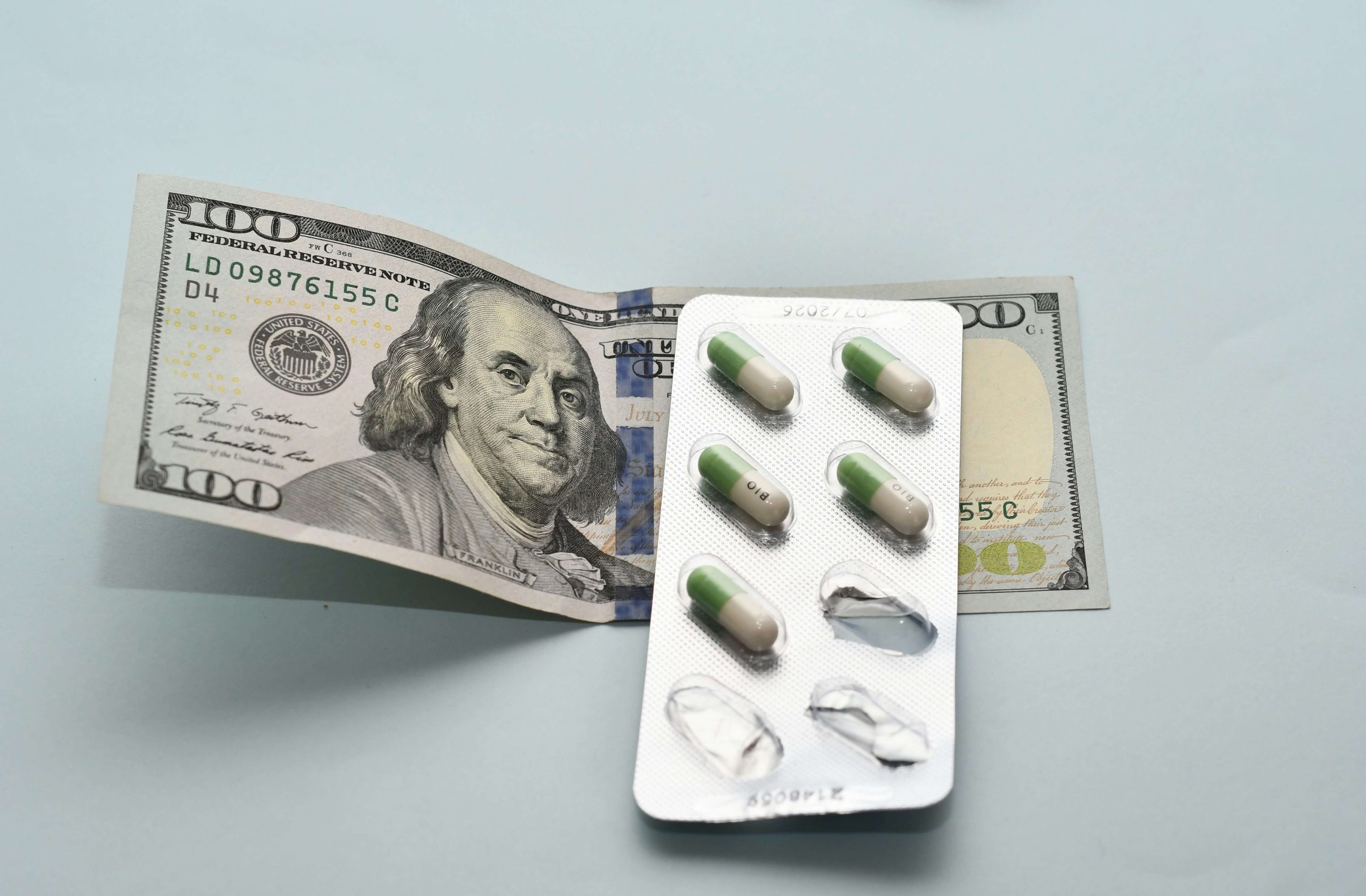
The rise of the Health Savings Account (HSA) is inextricably linked to the rise of the high-deductible health plan (HDHP).
In 2006, just 4% of people with employer-sponsored insurance had an HDHP. By 2023, that number had surged to 30%.
On top of that, when pandemic-era federal subsidies expired, many Americans buying their own insurance were forced into high-deductible bronze or catastrophic plans simply to afford the monthly premiums.
Adoption of these plans, and the HSAs that come with them, varies wildly depending on where you live in the United States.
Percentage of Privately Insured Population Covered by an HSA
Hover or tap a state to see its value.
(Note: Adoption spans from a low of 3% in Hawaii to a staggering 62% in Utah and 55% in Minnesota.)
The systemic flaw is that many consumers enter this ecosystem out of financial necessity rather than financial literacy.
Take the example of Madison Burgess, a 31-year-old teacher in San Diego. Seeking a cheaper monthly premium for her husband, she chose a high-deductible plan without understanding that their coverage wouldn't kick in until they had paid $5,800 out of pocket.
Like many Americans, she didn't even know she could open an HSA to prepare for this burden, and says, "I've never thought about having to put money away for a deductible."
The HSA as a Checking Account
For the people using an HSA as it was originally intended, to pay for current medical expenses, the system is highly unforgiving.
Most HSA users treat their account like a medical checking account.
Money goes in from payroll deductions and gets immediately wiped out by doctor visits and pharmacy bills.
In 2025, about 25 cents of every dollar contributed stayed in HSAs, while the remaining 75% flowed right back out through withdrawals.
You can see this hand-to-mouth pattern of healthcare survival most clearly in how account balances are distributed across the country.
Health Savings Account Balance Distribution
Hover or tap a bar to see its value.
Over 17.5% of HSA accounts sit at a zero balance, and another 30.8% hold less than $500.
In total, nearly half of all HSAs in America contain little to no money.
Ironically, younger generations are adopting HSAs at the highest rates, 56% of Gen Z and 50% of Millennials, even though these same younger Americans carry the heaviest economic burden and hold the lowest average balances.
The HSA as a "Super-IRA"
While the masses use HSAs to scrape by, a smaller group of elite users is exploiting the system's architecture to build immense, tax-free generational wealth.
If you have enough disposable income to pay your medical bills out-of-pocket, you never actually have to touch your HSA funds.
Instead, you can invest the balance in stocks and mutual funds.
Do that, and you unlock the "triple tax advantage." Contributions are tax-deductible, growth is tax-free, and medical withdrawals are tax-free.
On top of that, unlike traditional 401(k)s or IRAs, HSAs have no Required Minimum Distributions at age 73, so the money can compound indefinitely.
If you keep your medical receipts from decades prior, you can pull cash out of your HSA tax-free at any time in the future to reimburse yourself, a highly lucrative loophole known as the "HSA receipt trick."
Once an account holder turns 65, they can also withdraw funds for non-medical reasons penalty-free, paying only ordinary income tax, which mirrors a traditional 401(k) almost exactly.
HSA Investment Assets in Billions
Hover or tap a bar to see its value. 2026 through 2028 are estimated.
Swipe to see the full timeline.
(Note: On mobile or tablet please scroll to the right to see the rest of the graph)
This wealth-building strategy has caused HSA investment assets to skyrocket.
From just $15.7 billion in 2019, investment assets exploded to an estimated $85 billion by the end of 2025, and are projected to surpass $123 billion by 2028.
Today, only about 10% of HSA accounts hold invested assets, but those investment account holders control a staggering 59% of all HSA assets.
The average balance for an invested HSA is over $22,600, nearly ten times larger than the average cash-only account.
A Systemic Shift
In 2009, 95% of all HSA assets were held in cash deposits, used by average Americans to pay their healthcare bills.
Since then, as the wealthy have caught on to the HSA's unparalleled tax advantages, investments have steadily swallowed up the asset pool.
By 2026, the breakdown of HSA assets is estimated to hit an exact 50/50 split between cash deposits and investments, with investments projected to take the outright majority by 2027.
Breakdown of HSA Assets by Type
Hover or tap a bar to see its value. 2026 through 2028 are estimated.
Swipe to see the full timeline.
(Note: On mobile, please scroll to the right to see the rest of the columns)
Is This System Actually Working As Designed?
The evolution of the HSA is a perfect microcosm of broader systemic inequities in the United States.
The system functions beautifully, but only if you are already financially secure. If you are struggling with the rising cost of living, you get forced into a high-deductible plan and have to spend your HSA dollars immediately just to survive, missing out on any compound growth.
But if you are wealthy enough to bypass using the HSA for its stated purpose, healthcare, the government rewards you with the most efficient, tax-free wealth-compounding vehicle in existence.
As the HSA market approaches $200 billion, it is worth asking a hard question. Are Health Savings Accounts actually solving the American healthcare affordability crisis, or have they simply created a lucrative new tax haven disguised as a medical necessity?
Editors Note: The 1% figure refers to the top 1% of HSA users, those using the account primarily as a wealth-building vehicle rather than for its original purpose of covering medical expenses, as we outlined in the article.
We appreciate the volume of feedback this piece generated, and the question came up often enough that it's worth clarifying here.
Most HSA holders use the account as intended, to cover medical costs as they arise.
The 1% we referenced are the outliers who treat it as a long-term investment account, letting the balance grow and paying for medical expenses out of pocket instead.
Leave a Reply